Mon - Fri: 9:00 - 19:00 / Closed on Weekends
+86-15006240650 295069084@qq.com

Office Address

Nanlin Development Zone, Tangqiao Town, Zhangjiagang City, Suzhou, Jiangsu Province

Phone Number

+86-15006240650

Email Address

295069084@qq.com

How to Choose the Right Tube Bending Machine for Your Business: A Complete Buying Guide

In industries such as metal fabrication, furniture manufacturing, automotive components, construction, and fitness equipment, tube bending machines play a critical role in ensuring both productivity and product consistency. Choosing the wrong machine can lead to low efficiency, quality issues, and unnecessary long-term costs. With a wide variety of tube bending machines available on the market, understanding how to select the right one for your specific application is essential.

This guide will walk you through the key factors to consider when purchasing a tube bending machine, including machine types, technical parameters, material compatibility, and common mistakes to avoid.

What Is a Tube Bending Machine and Why Is It Important?

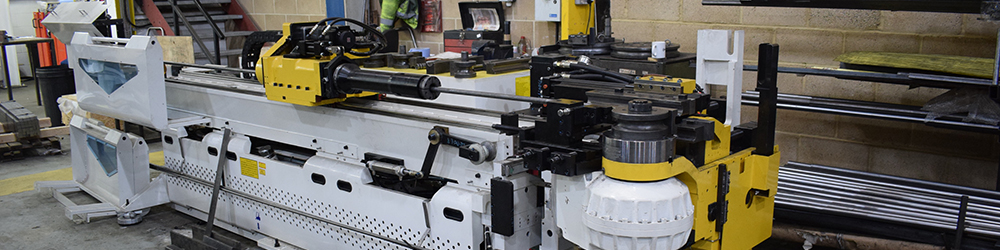
A tube bending machine is an industrial device designed to bend metal tubes or pipes into specific angles and radii without compromising structural integrity. Compared to manual bending or simple mechanical tools, modern tube bending machines offer significantly higher accuracy, repeatability, and produ·ction efficiency.

For manufacturers handling medium to large production volumes, tube bending machines help reduce labor dependency, minimize material waste, and ensure uniform quality across batches. This is especially important for export-oriented businesses, where dimensional accuracy and visual consistency directly impact customer satisfaction and compliance with international standards.

Main Types of Tube Bending Machines

Manual and Semi-Automatic Tube Bending Machines

Manual and semi-automatic tube bending machines are typically used for small-scale production or workshops with relatively simple bending requirements. These machines are cost-effective and easy to operate, making them suitable for basic bends with limited angles and pipe sizes.

However, because they rely heavily on operator experience, consistency can vary between parts. For businesses planning to scale production or handle more complex bending geometries, these machines may become a bottleneck over time.

Hydraulic Tube Bending Machines

Hydraulic tube bending machines are widely used in industrial environments due to their strong bending force and stable performance. They are particularly effective when working with thick-walled tubes or larger diameters, where manual force is insufficient.

While hydraulic machines offer better power and reliability than manual options, their precision often depends on operator adjustment. As a result, they are well-suited for medium-volume production but may not be ideal for applications requiring highly complex, multi-angle bends with tight tolerances.

CNC Tube Bending Machines

CNC tube bending machines represent the most advanced solution for high-volume and high-precision production. Equipped with programmable control systems, these machines can store multiple bending programs, execute complex multi-radius bends, and maintain consistent accuracy over long production runs.

Although the initial investment is higher, CNC machines significantly reduce labor costs, minimize human error, and improve overall production efficiency. For manufacturers focused on long-term growth and international markets, CNC tube bending machines often provide the best return on investment.

Key Technical Parameters to Consider

When selecting a tube bending machine, understanding technical specifications is just as important as choosing the right machine type.

The maximum tube diameter and wall thickness determine whether the machine can handle your current materials as well as future production needs. Choosing a machine with a limited capacity may restrict business growth and require costly upgrades later.

The minimum bending radius is another critical factor, especially for applications involving tight curves. A smaller bending radius requires greater control and higher-quality tooling to avoid deformation, cracking, or flattening of the tube.

Finally, bending accuracy and repeatability directly impact product quality. High repeatability ensures that every part meets the same standard, which is essential for mass production and international customers who demand consistency.


Material Compatibility and Bending Challenges

Different materials behave differently during the bending process, and not all tube bending machines perform equally across materials.

Stainless steel, for example, has high strength and strong springback characteristics, requiring precise control and robust tooling. Aluminum is lighter and easier to bend but is more prone to flattening if parameters are not properly adjusted. Carbon steel is widely used due to its balanced properties, while copper offers excellent ductility but requires surface protection to prevent damage.

Selecting a machine that supports multiple materials, along with proper molds and parameter adjustment options, allows manufacturers to remain flexible and competitive.

Industry Applications of Tube Bending Machines

Tube bending machines are used across a wide range of industries, each with unique technical and production requirements. Furniture manufacturers rely on consistent bends for frames and structural components, while automotive suppliers demand tight tolerances for exhaust systems and chassis parts.

In construction and infrastructure projects, tube bending machines are essential for scaffolding, handrails, and structural supports. Fitness equipment and HVAC systems also require precise bending to ensure safety, durability, and ease of installation.

Understanding your target industry helps determine the level of automation and precision your business truly needs.

Common Mistakes to Avoid When Purchasing a Tube Bending Machine

One of the most common mistakes buyers make is focusing solely on purchase price rather than long-term operating costs. A lower-priced machine may require more labor, frequent maintenance, or produce higher rejection rates, resulting in greater expenses over time.

Another frequent issue is selecting equipment with excessive capacity or overly complex features that are rarely used. The best solution is one that matches your actual production requirements while allowing reasonable room for future expansion.

Working with an experienced supplier who provides technical support, training, and after-sales service can help avoid these costly mistakes.

Conclusion: Invest in the Right Solution for Long-Term Success

Choosing the right tube bending machine is not just about buying equipment; it is about investing in productivity, quality, and future growth. By carefully evaluating machine types, technical parameters, material requirements, and industry applications, manufacturers can make informed decisions that support long-term success.

If you are looking for a reliable tube bending machine tailored to your production needs, our engineering team is ready to provide professional recommendations and customized solutions.

Contact us today to discuss your project and receive a detailed quotation.

Read More